
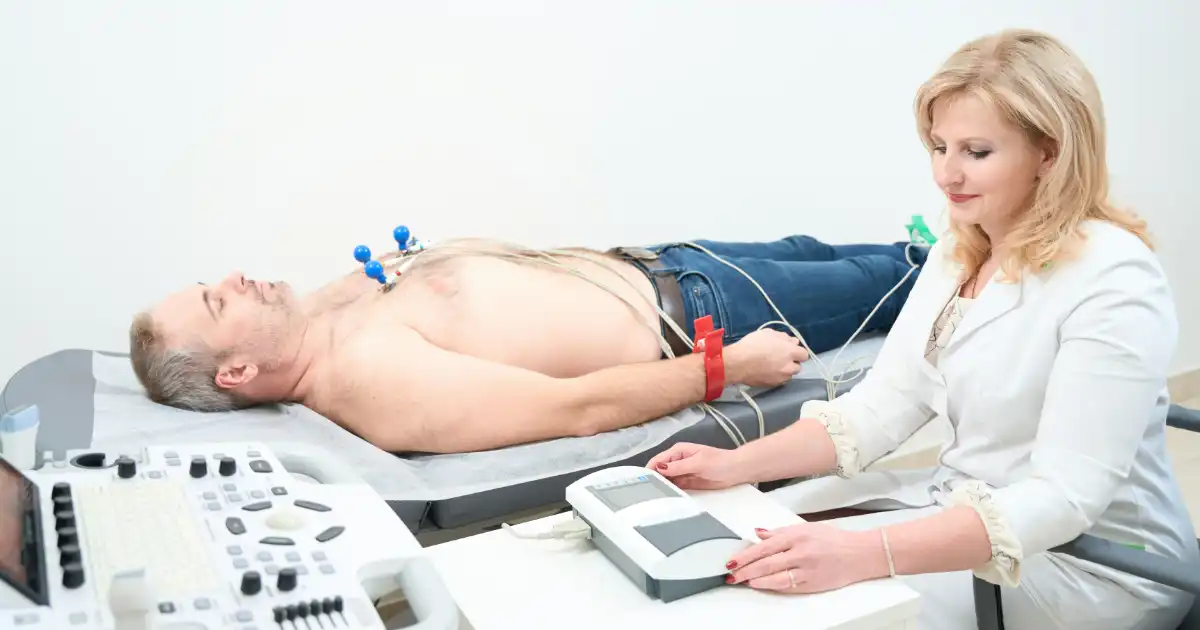
People with heart symptoms often hear about two common tests: the cardiac stress test and the echocardiogram. Both check heart health, but they do different things. Which one do you need?
The answer depends on your symptoms, health history, and what your doctor is looking for. This article explains what each test does and how to know which might be right for you.
What Is a Cardiac Stress Test?
A cardiac stress test checks how your heart works during exercise or stress. You may walk or run on a treadmill, or take medication to increase your heart rate if you are unable to exercise. While you move, doctors watch your heart rate, blood pressure, and how your heart’s electrical signals change.
What it shows:
- If your heart gets enough blood during stress
- Signs of blocked arteries (coronary artery disease)
- How your heart handles exercise
Common reasons for a stress test:
- Chest pain or tightness during exercise
- Shortness of breath
- Unexplained tiredness
- Checking if heart treatments are working
What Is an Echocardiogram?
An echocardiogram (also known as an echo) uses sound waves to create images of your heart. It shows your heart’s size, shape, and movement. The test is conducted while you are resting. A technician moves a small device (transducer) over your chest, and you can see the images on a screen.
What it shows:
- How well your heart pumps blood
- Heart valve problems
- Heart muscle weakness or damage
- Fluid around the heart
Common reasons for an echocardiogram:
- Heart murmur
- Swelling in the legs (possible heart failure)
- Shortness of breath at rest
- Checking for heart damage after a heart attack
Main Differences Between Cardiac Stress Test and Echocardiogram
| Cardiac Stress Test | Echocardiogram |
| Measures the heart under stress | Shows the heart at rest |
| Detects blocked arteries | Checks the heart structure |
| Tracks the heart’s response | Evaluates pumping strength |
| Usually involves exercise | Uses ultrasound, no exercise |
Which Test Do You Need?
Your doctor will determine the course of treatment based on your symptoms and medical history.
Choose a cardiac stress test if:
- You have chest pain with activity
- You need to check for blocked arteries
- Your doctor wants to see how your heart handles exercise
Choose an echocardiogram if:
- You have signs of heart failure (like swelling or tiredness)
- You need your heart valves or muscles checked
- Your doctor suspects a problem with heart structure
Sometimes, doctors order both tests. They may even combine them in a “stress echo,” where an echocardiogram is done before and after exercise.
How to Prepare for Each Test
For a cardiac stress test:
- Wear comfortable clothes and shoes
- Avoid caffeine and smoking before the test
- Tell your doctor about all medicines
For an echocardiogram:
- No special preparation is usually needed
- Wear a shirt that is easy to remove
Always follow your clinic’s instructions.
What to Expect During the Tests
Cardiac Stress Test:
- Electrodes are placed on your chest
- You walk or run on a treadmill (or get medicine)
- The test lasts about 30-45 minutes
Echocardiogram:
- You lie on a table
- Gel is applied to your chest
- A device is moved over your skin
- The test takes about 30-60 minutes
Final Thoughts
Both cardiac stress tests and echocardiograms play important roles in finding and understanding heart problems. Each test provides doctors with different information about how your heart functions and whether there are any issues. Your doctor will decide which test is right for you based on your symptoms, health history, and what they need to know about your heart.
If you are ever unsure about why a test is being ordered or what the results mean, do not hesitate to ask questions. Understanding your tests helps you take an active role in your heart care. Getting the right test at the right time gives you and your doctor the best chance to maintain your heart health and detect problems early.