
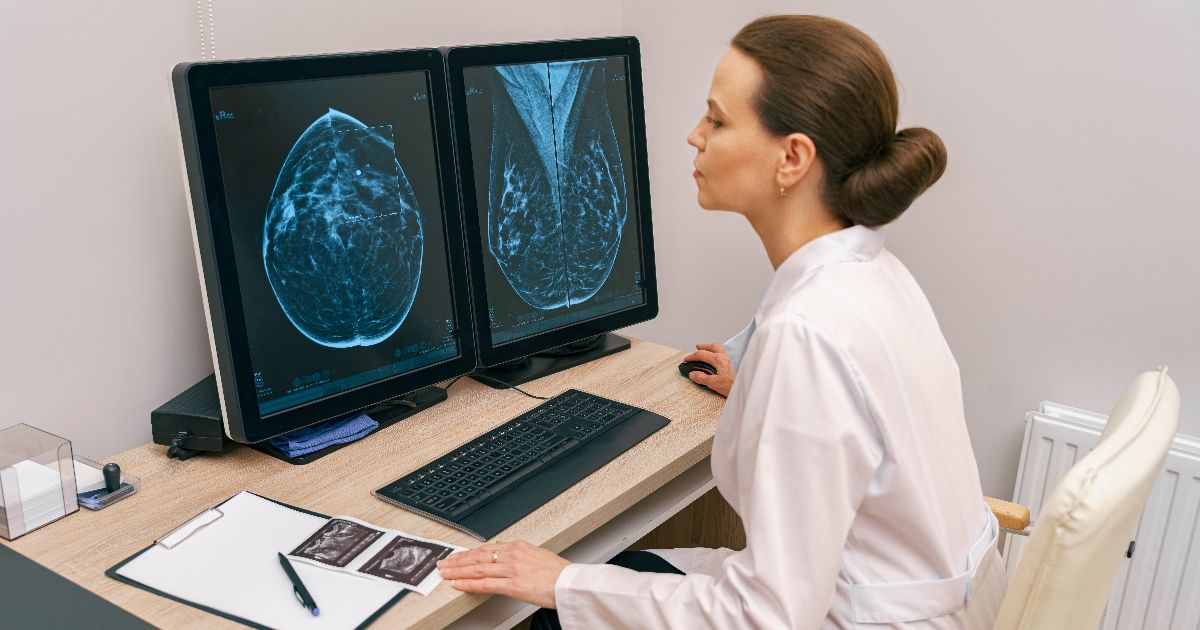
A 3D tomosynthesis mammogram is an advanced breast imaging test that creates detailed layered images of the breast.
It helps doctors find cancer earlier and with more accuracy than standard mammograms.
What Is a 3D Tomosynthesis Mammogram?
A 3D tomosynthesis mammogram is a type of breast X-ray that takes many images from different angles.
These images are then combined to form a 3D view of the breast.
It lets doctors see “slices” of breast tissue rather than a single flat image. This makes it easier to spot small tumors or hidden areas.
Importance
- It reduces the overlap of tissue
- It improves cancer detection
- It lowers false alarms
Many clinics now use this method as part of routine breast imaging.
How 3D Mammography Works
A 3D mammogram works by moving the X-ray arm in a small arc over the breast while taking multiple pictures. The machine then builds a 3D image from these shots.
The process is very similar to a regular mammogram.
What happens during the exam
- You stand in front of the machine
- Your breast is placed on a flat plate
- Gentle pressure is applied
- The machine takes multiple images
The test takes about 10 to 15 minutes.
You may feel pressure, but it should not be painful for most people.
Benefits of 3D Tomosynthesis Mammogram
A 3D tomosynthesis mammogram offers several key benefits compared to older methods.
Main advantages
- Finds cancer earlier
- Shows clearer images
- Reduces call-backs for extra tests
- Works better for dense breast tissue
Early detection saves lives. This type of imaging gives doctors a clearer view so they can act fast.
Screening 3D Tomosynthesis Mammogram
A screening 3D tomosynthesis mammogram checks for breast cancer in people who do not have symptoms. It is used as a routine test.
Doctors use this test to find cancer early, before it causes signs or symptoms.
Who should get screening
- Women age 40 and older
- People with average risk
- Those with no breast symptoms
Why screening matters
Screening helps catch cancer early. Early cancer is easier to treat and has better outcomes.
Diagnostic 3D Tomosynthesis Mammogram
A diagnostic 3D tomosynthesis mammogram is used when there is a concern. This could be a lump, pain, or an abnormal screening result.
This test requires more focused images to examine a specific area closely.
When it is used
- After an abnormal screening
- If you feel a lump
- If you have breast pain or changes
What makes it different
- More images are taken
- The doctor may review images during the exam
- It focuses on problem areas
This type of exam helps determine whether something is normal or needs further testing.
Spot Compression in 3D Mammography
Spot compression is a special technique used during a 3D mammogram to get a clearer view of a small area.
It applies pressure to a specific part of the breast rather than the whole breast.
Why is spot compression used
- To zoom in on a suspicious area
- To reduce tissue overlap
- To improve image clarity
What to expect
The pressure may feel stronger, but it lasts only a few seconds. It helps doctors get a better look and avoid unnecessary biopsies.
Is 3D Mammography Safe?
Yes, a 3D tomosynthesis mammogram is safe. It uses a low dose of radiation.
The radiation level is similar to a standard mammogram.
Safety facts
- Approved by the FDA
- Widely used in hospitals
- Benefits outweigh the risks
Doctors recommend regular screening because early detection is key.
Clear Answers About 3D Mammograms
A 3D tomosynthesis mammogram provides a clearer, more detailed view of breast tissue, helping doctors detect cancer earlier and reduce false alarms.
I see this as a major step forward in breast imaging. It improves accuracy and gives patients more peace of mind.
Screening helps catch problems early. Diagnostic exams help confirm concerns. Spot compression helps focus on small areas.
If you are due for a mammogram, ask about 3D imaging. It can make a real difference in your care.

Leave a Reply